
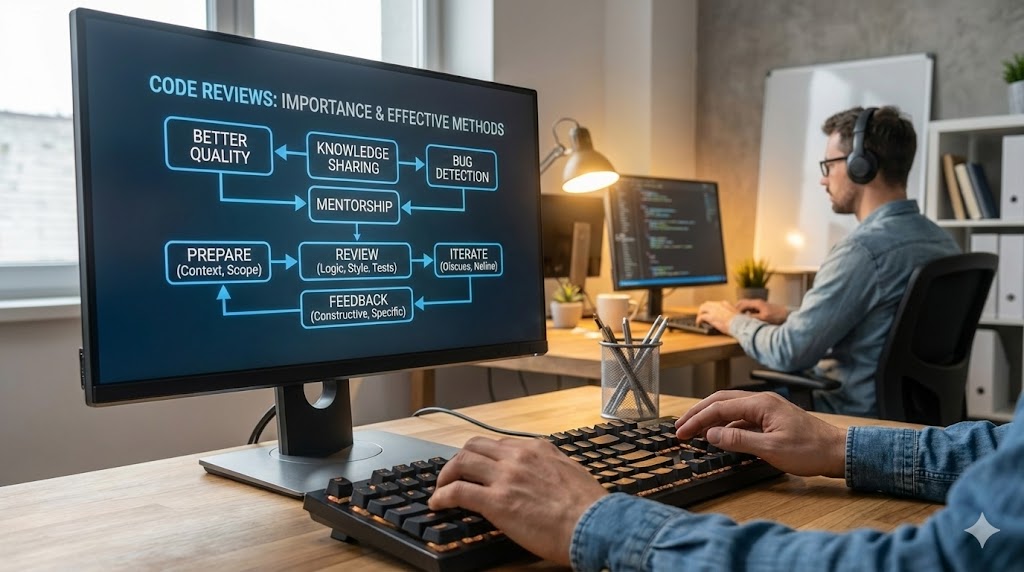
The Importance of Code Reviews and How to Do Them Effectively
Code reviews are a critical part of the software development process. They help improve code quality, catch bugs early, enhance team collaboration, and ensure best practices are followed. A well-conducted code review can significantly reduce technical debt and improve the maintainability of a codebase.
- Why Code Reviews Matter
i.Improve Code Quality
Code reviews help maintain a high standard of code by ensuring it adheres to best practices, follows coding conventions, and meets performance requirements.
ii. Catch Bugs Early
Reviewing code before it merges into the main branch helps detect potential defects before they reach production, saving you time and effort in debugging later.
iii. Knowledge Sharing and Team Collaboration
Code reviews allow developers to learn from each other, share feedback, and discuss different approaches to problem-solving.
iv. Maintain Consistency in Codebase
A review process ensures that coding styles and patterns remain consistent, making it easier for new developers to onboard and work on the project.
- Common Challenges in Code Reviews
i. Time Constraints
With tight deadlines, developers may rush through reviews or skip them altogether, leading to lower code quality.
ii. Subjective Feedback
Without clear guidelines, reviews can become opinionated rather than focusing on objective improvements.
iii. Lack of Attention to Detail
Reviewers may overlook important aspects like security, performance, or scalability, focusing only on syntax and style.
- How to Conduct Effective Code Reviews
i. Set Clear Guidelines
Establish coding standards, best practices, and a checklist for reviewers to follow. This ensures consistency and reduces subjectivity.
ii. Focus on Readability and Maintainability
Code should be easy to understand and maintain. Ensure variable names, comments, and overall structure make the code self-explanatory.
iii. Keep Reviews Small and Manageable
Large pull requests are harder to review thoroughly. Encourage frequent, smaller code changes to make reviews more effective.
iv. Focus on Readability and Maintainability
Code should be easy to understand and maintain. Ensure variable names, comments, and overall structure make the code self-explanatory.
v. Use Automated Tools
Leverage linters, static code analysis tools, and automated testing to catch issues before manual review, allowing reviewers to focus on higher-level concerns.
Code reviews are an essential part of maintaining a high-quality codebase. When done effectively, they lead to better software, stronger teams, and fewer defects in production. By following best practices, providing constructive feedback, and fostering a culture of continuous improvement, teams can make code reviews a productive and valuable process.